
The Princeton Dogs: From Rescue to Accountability
What began with the removal of ten severely underweight dogs from a rural Princeton property became months of emergency veterinary care, foster recovery, criminal proceedings and community support. This is the story of the Princeton Hounds, the survivors who received a second chance, and Akira, Millie and Roscoe, who should have had one too.
Download PDF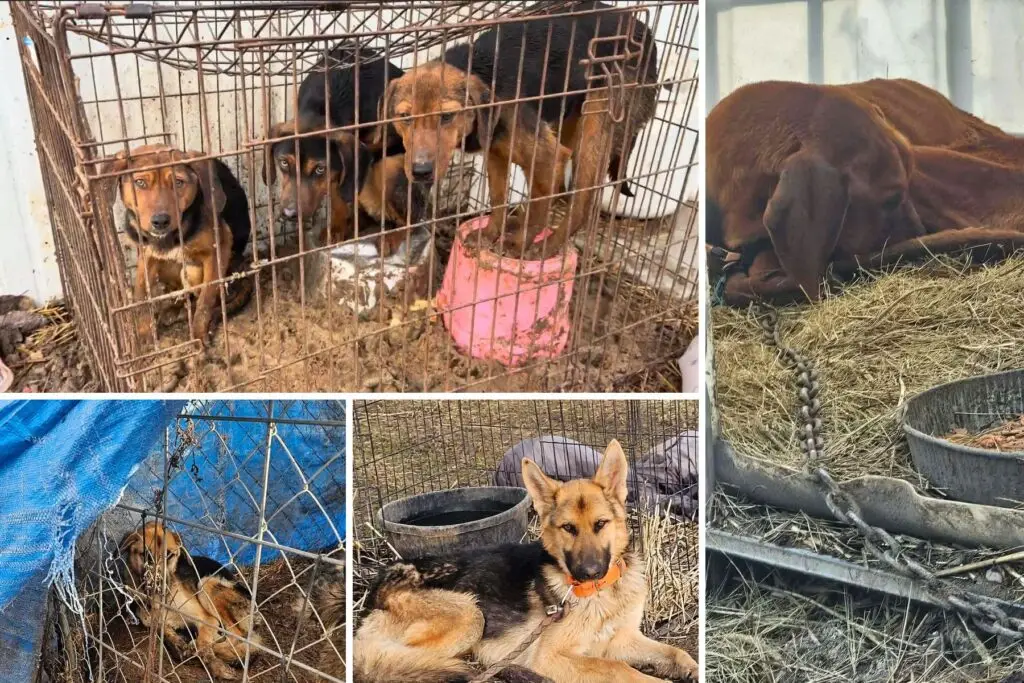
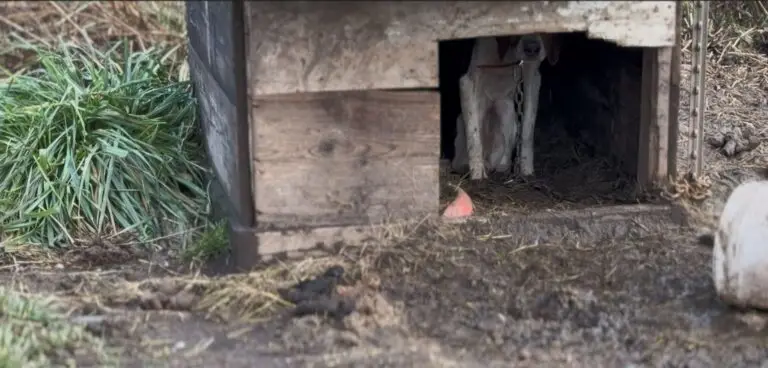
On January 5, 2026, Idaho Animal Rescue Network responded to a rural property on McKinneyville Road near Princeton, Idaho, after concerns about a group of dogs reached us through a third party. What our volunteers encountered that day would become one of the most difficult animal cruelty cases our organization had handled and the beginning of a story that would continue through veterinary hospitals, foster homes and courtrooms for months.
By the end of that day, two dogs had been found dead and ten surviving dogs had been removed from the property. The survivors included seven adults and three puppies, many of them severely underweight. One deceased dog was found inside the residence and another outside in a kennel. One was subsequently transported to Washington State University’s Washington Animal Disease Diagnostic Laboratory for necropsy. The Latah County Sheriff’s Office opened an animal cruelty investigation, while rescuers faced the immediate challenge of finding safe placement and medical care for ten dogs.
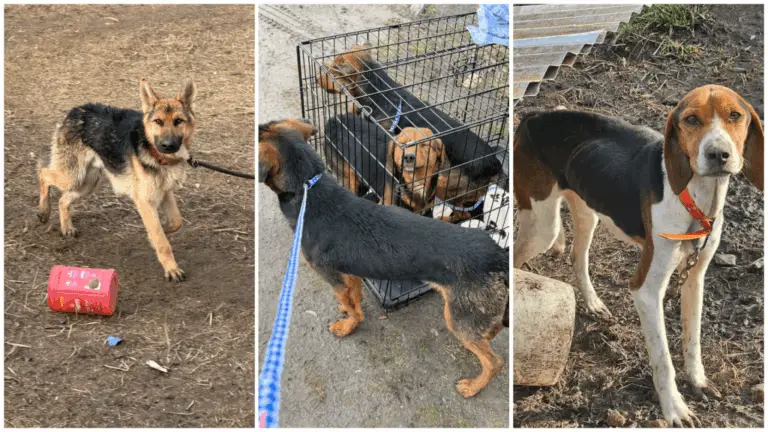
The response quickly became a collaborative effort. Humane Society of the Palouse stepped forward and accepted eight of the surviving dogs, including the puppies. Taking that many animals into care at once was significant enough that the shelter temporarily closed while staff concentrated on the new arrivals. Those dogs received the care they needed through HSOP and have since gone on to be adopted.
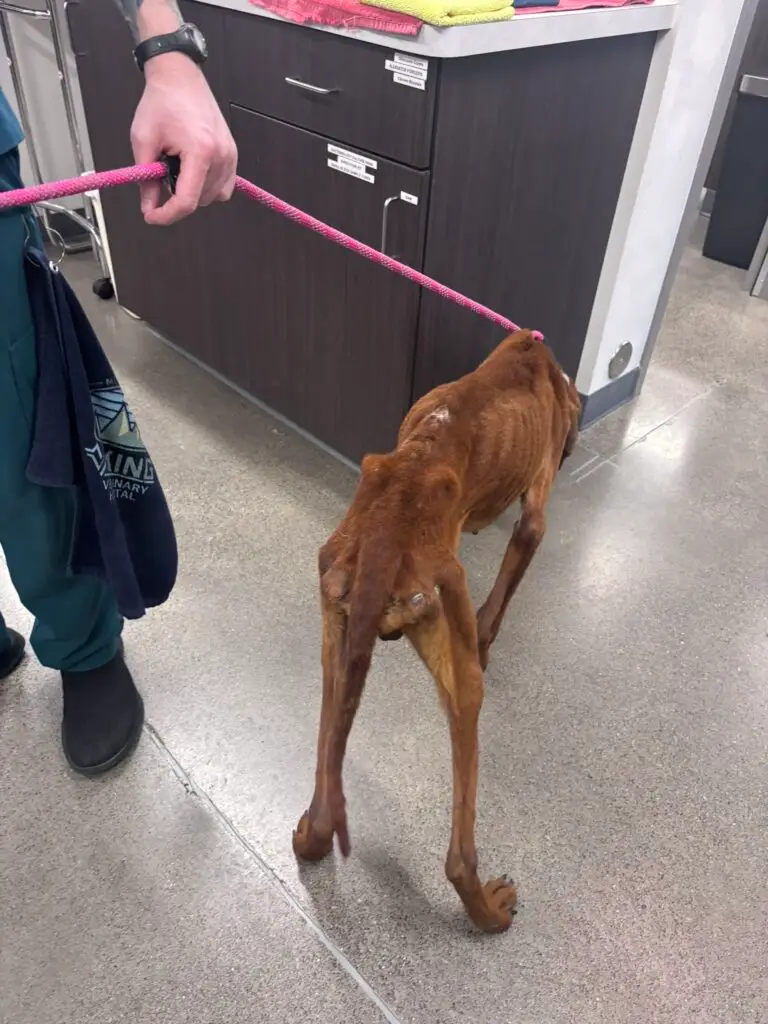
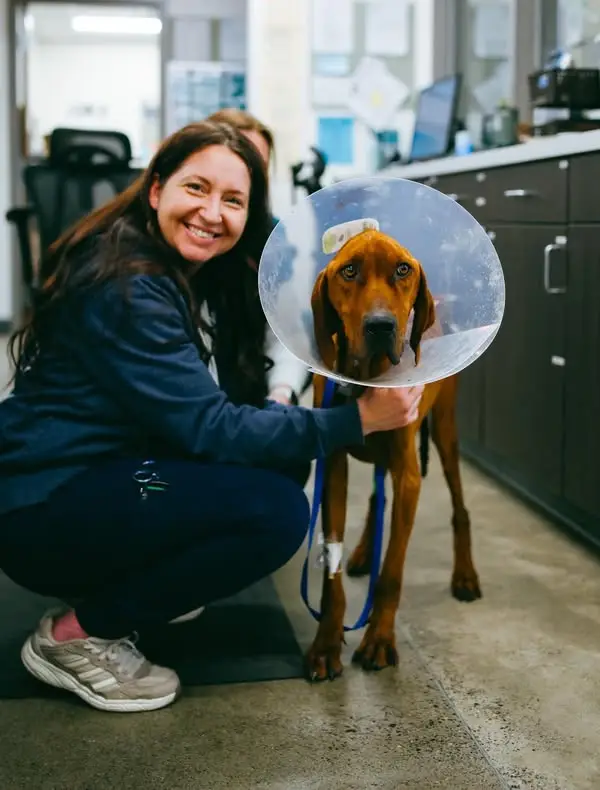
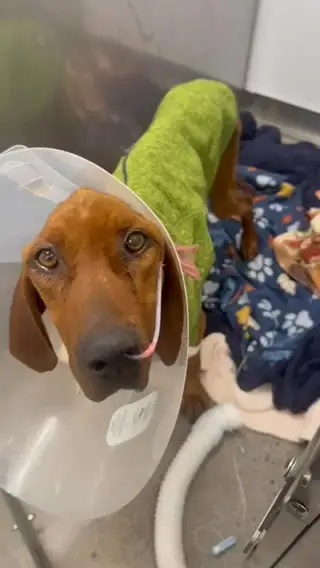
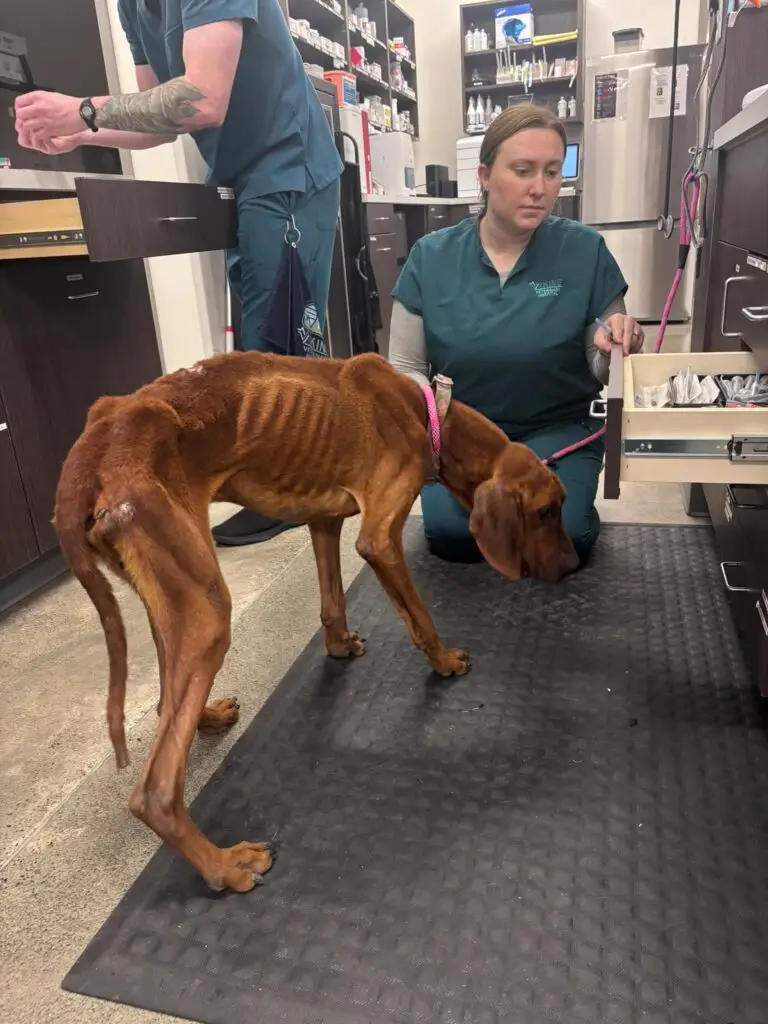
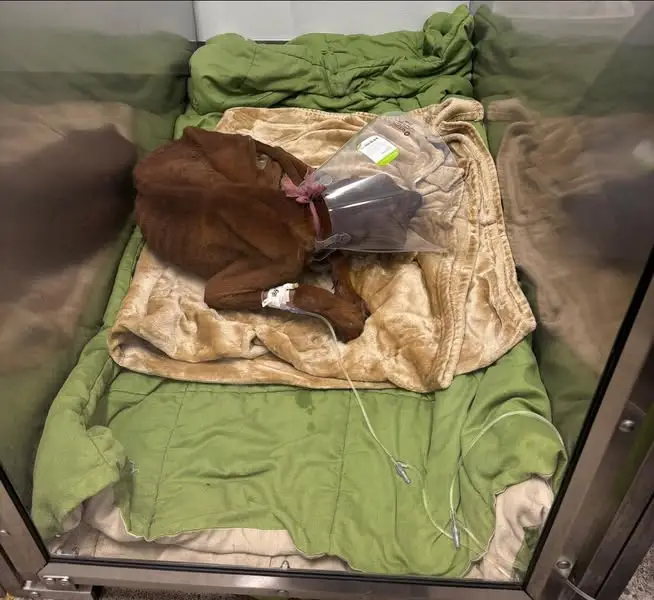
Two Redbone Coonhounds were in significantly worse condition and required immediate hospitalization. Their names were Roscoe and Ruby, and they came into IARN’s care and were transported directly to Viking Veterinary Hospital in Moscow.

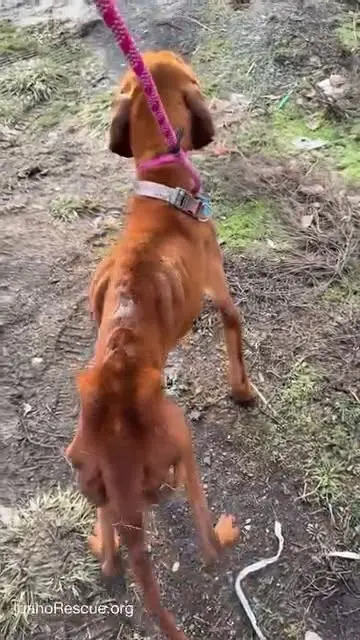
Our records documented Roscoe at approximately a 1 out of 9 body-condition score and Ruby at approximately 2 out of 9. They weren’t simply thin. Their bodies reflected prolonged deprivation, and recovering them required careful veterinary management. Ruby began responding to treatment and eventually became stable enough to leave the hospital and continue recovering in an IARN medical foster home.
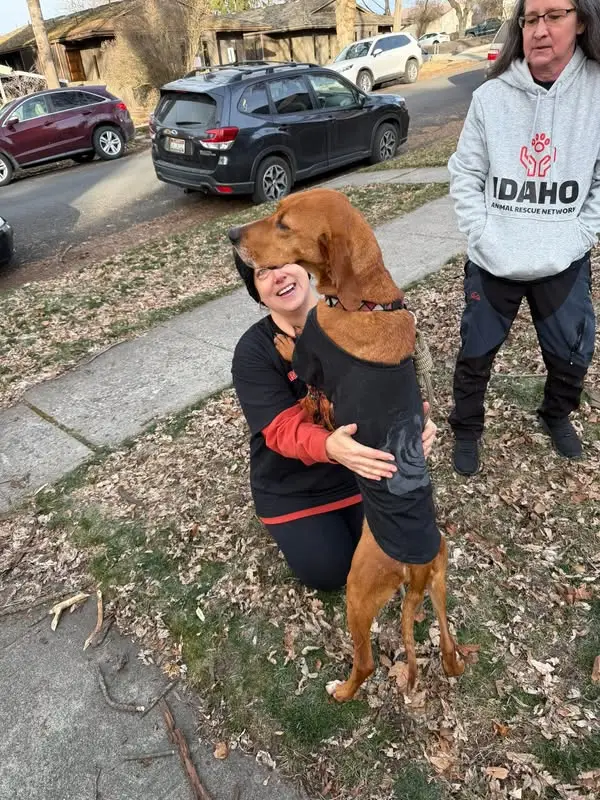
There she met Fritter, another IARN survivor who had battled parvovirus years earlier. Fritter became Ruby’s foster sister and helped introduce her to a very different life. Ruby learned about regular meals, comfortable beds, toys, other dogs who wanted to play with her and people she could trust. As the weeks passed, her bloodwork improved, weight returned to her body and her personality began emerging along with her health.
Roscoe faced a much more difficult fight. He was profoundly emaciated and severely anemic. Veterinarians carefully managed his refeeding while treating infection and monitoring a body that had very little reserve left. Despite his physical condition, Roscoe had walked away from the Princeton property on his own feet. One image from January 5 has stayed with us ever since: a skeletal, desperately ill hound finally leaving that property with his tail still wagging.


For several days, there was reason to hope he would make it. Then Roscoe developed severe pneumonia. His body could not overcome it, and on January 14, just nine days after he was removed from the property, Roscoe died despite intensive veterinary treatment.
Roscoe was the third dog lost in connection with the Princeton case. Akira and Millie were already dead when help arrived. They never had the opportunity to receive the veterinary care Roscoe and Ruby received, to recover in foster homes or to eventually walk into adoptive homes like the surviving dogs.
Removing an animal from neglect does not immediately undo what came before it. Sometimes recovery takes weeks or months. Sometimes the physical damage has progressed too far. Roscoe had finally reached warmth, food, veterinary care and people who were fighting for him, but he had only nine days to experience them. Akira and Millie never received even those nine days.
From Rescue to the Courtroom
While veterinarians, foster families and two animal welfare organizations concentrated on the dogs, the Latah County Sheriff’s Office continued investigating what had happened on McKinneyville Road. Court filings soon identified James and Jeannine Schraufnagel and Bethany Davis as defendants in criminal cases arising from the conditions involving the dogs. James and Jeannine were each initially charged with twelve misdemeanor counts of animal cruelty.
The criminal proceedings quickly drew public attention. James and Jeannine appeared in Latah County Magistrate Court on January 21 and pleaded not guilty to the original charges. Community members attended the proceedings, including representatives from IARN. By then, people throughout the region had been following the dogs, grieving the ones we lost and watching the survivors recover.
For our volunteers, the work continued outside the courtroom. Veterinary records, photographs and other documentation had to be maintained. Animals still required appointments and foster care. Communication with investigators and prosecutors continued. Volunteers attended court proceedings while simultaneously handling the everyday work of an all-volunteer rescue, and Humane Society of the Palouse continued caring for the eight dogs it had accepted.
The community stayed involved as well. People donated toward veterinary expenses, shared updates, followed Ruby’s recovery and asked what was happening with the criminal cases. Roscoe’s death affected people who had never met him but had followed his fight from the moment he was removed. At the same time, updates showing Ruby gaining weight and learning to play provided a very different view of what life after January 5 could become.
Nearly $13,000 in Rescue Expenses
By the time the cases moved through court, IARN’s expenses associated with the Princeton dogs had reached nearly $13,000. Emergency hospitalization represented only part of that amount. Diagnostic testing, medications, follow-up veterinary care, transportation, supplies and foster support continued long after the dogs left McKinneyville Road.
IARN has no paid staff. The people transporting animals, attending court, coordinating care and following the criminal proceedings were volunteers doing this work around their jobs and families.
As the prosecution progressed, Bethany Davis’s role in the case became more complicated. An amended criminal complaint filed in April alleged that Davis had charge or custody of four of the dogs: Millie, a female Bluetick Coonhound, and three Treeing Walker Coonhound puppies named Rebel, Annabelle and Paws. Prosecutors alleged that the animals were subjected to unsanitary confinement, inadequate housing and/or inadequate sustenance, water or shelter.
Davis subsequently entered into an amended Rule 11 plea agreement with prosecutors. Filed April 22, the agreement provided that she would plead guilty to one misdemeanor count of cruelty to animals that combined separate allegations from the previous complaint into a single count. Under its terms, the state agreed to no jail if Davis complied with the agreement and conditions of probation. It called for a $100 fine, one year of supervised probation and a prohibition on having the care or custody of animals during probation unless approved by her probation officer.
The agreement contained another significant provision. Davis agreed to cooperate fully and truthfully in the investigation and prosecution of James Schraufnagel’s animal cruelty case, Jeannine Schraufnagel’s animal cruelty case and another criminal case involving James that developed while the Princeton proceedings were pending.
That additional case arose after Davis reported that James had threatened her. According to a probable-cause affidavit filed in Latah County, a sheriff’s officer contacted Davis on April 9 after she reported threats from her son. Davis alleged that James had threatened her life and described communications concerning two criminal cases in which she was a witness: the Princeton animal cruelty case and a separate case involving allegations concerning James’s minor child. The affidavit identifies the proceedings as an injury-to-child case and a cruelty-to-animal case.
The officer also reviewed Facebook Messenger communications between Davis and James, while Davis reported that additional alleged threats occurred during audio calls. Following the investigation, the officer requested that James be charged with felony witness intimidation. Those allegations constituted a separate criminal case and should not be confused with the animal cruelty convictions, but the development became directly connected to the Princeton proceedings because Davis was both a defendant in the animal case and a cooperating witness in the prosecutions involving James and Jeannine.
Sentencing
By summer, the animal cruelty cases were moving toward resolution without trials on all of the original charges. The eventual dispositions looked considerably different from the original filings, which had included twelve misdemeanor animal cruelty counts against James and another twelve against Jeannine.
On July 8, 2026, James Schraufnagel pleaded guilty to four misdemeanor counts of animal cruelty and Jeannine Schraufnagel pleaded guilty to two. Bethany Davis’s written agreement provided for a guilty plea to one combined misdemeanor animal cruelty count. The resulting sentences included probation and restrictions on animal ownership or custody.
James’s sentence also included incarceration. He entered custody on July 8, the day of sentencing. According to information subsequently confirmed with the Latah County Prosecutor’s Office, the jail term attributable to his animal cruelty case is scheduled to conclude November 6, 2026. A separate 30-day jail term from another case follows that sentence, placing his scheduled release on December 6, 2026. His animal cruelty sentence also included four years of supervised probation and restrictions on animal ownership.
For the people who had followed the case since January, the difference between the original charges and the final convictions understandably generated questions. They had seen the photographs. Some had seen the dogs themselves. They had watched Roscoe fight for his life and die, watched Ruby slowly regain her health and followed the other survivors into recovery. Criminal proceedings, however, are ultimately shaped by the evidence available to prosecutors, applicable Idaho law, plea negotiations and decisions made by the court.
The July proceedings brought the animal cruelty prosecutions toward their conclusion, but for the dogs and the people caring for them, the story had never been confined to what happened inside a courtroom.
The Dogs Who Got Their Second Chance, and the Three Who Didn’t
While the legal process moved through hearings, amended complaints and plea agreements, the surviving dogs were living on an entirely different timeline. Eight of them had gone to Humane Society of the Palouse, where they received care and eventually went on to adoptive homes. Ruby continued recovering through IARN, gaining weight, becoming healthier and increasingly showing the personality that had been hidden beneath her physical condition.
The transformation of the survivors showed what was possible once the dogs had adequate nutrition, veterinary treatment, safe housing and time. Animals who had left McKinneyville Road severely underweight eventually became somebody’s adopted dog. Ruby’s body changed dramatically, but so did her understanding of the world around her. She learned that food would continue arriving, that people could be trusted and that life could include play, affection and comfort.
It Took a Community

The Princeton response required far more than one organization. Humane Society of the Palouse made room for eight dogs with almost no notice and carried those animals through recovery and adoption. Viking Veterinary Hospital fought for Roscoe and Ruby. Foster families opened their homes. The Latah County Sheriff’s Office investigated. The Latah County Prosecutor’s Office carried the resulting criminal cases through months of proceedings. Volunteers documented, transported, fostered and attended court, while donors helped absorb nearly $13,000 in expenses incurred by IARN alone.
The community became part of that response from beginning to end. People who never personally met these dogs followed their stories. They donated, shared updates, celebrated weight gains and adoptions, attended court and continued asking what was happening months after the initial photographs disappeared from social media. That sustained support allowed the surviving dogs to move forward while the legal process unfolded separately.
Animal cruelty cases are often remembered by the day animals are removed because that is the portion most people see. The Princeton case shows how incomplete that picture can be. January 5 was only the beginning. What followed included emergency hospitalization, months of foster care, adoptions, veterinary bills, investigative work, criminal filings, arraignments, amended complaints, plea negotiations, allegations of witness intimidation, sentencing, probation and incarceration.
The numbers describe the scale of the case: twelve dogs, ten removed alive, eight transferred to Humane Society of the Palouse, two critically ill hounds hospitalized through IARN, nearly $13,000 in IARN expenses and months of criminal proceedings involving three defendants.
But numbers do not tell the whole story.
For our volunteers, this case is Ruby learning to trust. It is Fritter teaching another rescue dog how to play. It is watching weight slowly return to a body that had been painfully thin. It is seeing community members sitting in a courtroom weeks and months after the rescue because they had not forgotten the dogs whose photographs they had seen in January.
It is also Roscoe walking away from McKinneyville Road. He was skeletal and weak, but his tail was still wagging. After everything his body had endured, he was still willing to follow people toward something better. He finally had veterinarians fighting for him and people who knew his name. Nine days later, despite everything done to save him, he was gone.
But Roscoe was not the only dog we lost. Akira and Millie never had the opportunity to walk away at all. They were already dead when help arrived. They never got the veterinary team fighting for them, the foster home waiting for them or the opportunity to discover what life could look like somewhere else. We will never know what their recoveries might have looked like because they were never given that chance.
Ruby survived. The dogs who went to Humane Society of the Palouse recovered and went on to new homes. Their lives show us what was possible for the Princeton hounds once they were given food, medical care, safety and time.
Akira, Millie and Roscoe should have been among them.
The Princeton hound case did not begin and end with a dramatic rescue. It became months of veterinary medicine, foster care, community support, investigation and criminal proceedings. It required law enforcement, prosecutors, veterinarians, shelters, rescuers, foster families, volunteers, donors and members of the community to remain involved long after the emergency vehicles left McKinneyville Road.
We are grateful for every dog who walked away from that property and eventually into a new life. Their recoveries and adoptions are the outcome everyone hopes for when we respond to cases like this. But their happy endings will never erase the three who didn’t get one.
Akira should have had a chance.
Millie should have had a chance.
Roscoe should have had a chance.
They deserved the same future the survivors were finally given.
Follow the Story
See the original Facebook updates as this story unfolded.
 Facebook updateThe Rescue in Princeton
 Facebook updateCharges Filed in the Princeton Case
 Facebook updateRoscoe Deserved Better
 Facebook updateView the original Princeton update
 Facebook updateRemembering Roscoe
 Facebook updateRoscoe's Hospital Update
 Facebook updateView the original Princeton update
 Facebook updatePrinceton Hounds Case FAQ
 Facebook updateBethany Davis Arraignment Update